Big bucks, trust needed in orangutan trade
Big bucks, trust needed in orangutan trade
Nani Afrida – The Jakarta Post, 28 October 2008
A middle-aged man sat on a chair in his pet shop at an animal market in East Jakarta, waiting for his customers. He sells many kinds of birds, snakes, turtles, cats, dogs and monkeys.
The man — let’s call him Amin — is a pet trader who sells birds, snakes, turtles, cats, dogs and monkey. He is known for his “affordable” prices.
But, only a select few customers know that they can order special “pets” that are rare and protected by the Indonesian government.
“I know it is against the law, but I get a bigger revenue from this (selling protected species),” Amin told The Jakarta Post recently.
One of his most profitable “items” is the orangutan. Amin gets orangutans from his friends in the city who have contacts with traders in Sumatra.
“It is difficult to get orangutans. Honestly, I am not a first-hand trader; I could be the third- or the forth-hand trader. That is why the price of orangutans is so high,” Amin said.
It takes several weeks or even months, he said, for an ordered orangutan to arrive at his pet shop.
“We can one if you make a down payment first,” said Amin whispered.
He said many customers came to the pet market in search of the rare animal. Based on past experiences, Amin said he was now more careful with such customers.
“Sometimes police officers or environmental workers pretend to be customers. We have to be more careful because we do not want to be arrested,” Amin said.
Just like Amin, Lukman also sells orangutans.
“I started selling orangutans by accident. I got one from a friend in Sumatra. He had caught some orangutans in the jungle and asked me to sell them because he desperately needed the money,” said Lukman, who doesn’t own a pet shop but still manages to sell orangutans at markets throughout Jakarta.
Lukman, who refused to be called a orangutan trader, said there was indeed a mafia behind the illegal orangutan trade in Indonesia.
“I’m just a small trader compared to the mafia,” said Lukman.
He added his friends delivered the animals by truck, as it was easier than air transportation.
“Of course, police stop the trucks at some check points … if you just give them money they let you go,” said Lukman.
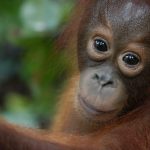
He said he sold orangutans at various prices, depending on their age and size. Baby orangutans fetch the highest prices and buyers often choose them over older orangutans as they are easier to take care for and train.
“We sell baby orangutans from Rp 3.5 million (US$350) to Rp 5 million (US$500) each, but the price is negotiable.”
Lukman said the price could double or even triple if delivered overseas.
He added the customers that bought orangutans were usually wealthy or “well-placed individuals”.
“It depends on how much money you have. With money you can buy anything, including bribing the authorities.”
Even though he has sold several orangutans, Lukman said he didn’t know details about the orangutan hunters. But his friends told him that people in Sumatra who fell forests for plantations, capture the orangutans trapped in the area.
“The local people collect and keep them, and if they have the opportunity they will sell them,” he said.
Both Amin and Lukman admitted that they violated the law by selling these endangered creatures. Unfortunately, the opportunity to make money from selling orangutans is a far bigger temptation, especially when rich people are willing to pay double the normal asking price.
They said the price of an orangutan rises almost daily, as the animal was becoming more difficult to find.
For security reason, they said they always screened their customers before opening their masks as orangutan sellers.
“The customers must have a lot of money and we must trust them first. I do not want to risk being arrested by the police after the transaction,” said Amin.