
Emotional call for palm oil industry to address environmental problems
Emotional call for palm oil industry to address environmental problems
Mongabay.com; Jeremy Hance; 21 October 2009
During what was at times an emotional speech, Sabah’s Minister of Tourism, Culture, and Environment, Datuk Masidi Manjun, called on the palm oil industry to stop polluting rivers and work with NGOs to save orangutans and other wildlife. He delivered the speech on the first day of an Orangutan Conservation Colloquium held in early October in the Malaysian state of Sabah on the island of Borneo.
“As a member of the state government I say to you the state government is completely dependent on palm oil, yes, but the future generations are also dependent on the [oil palm] planters to ensure that they inherit a world much better than what we were given,” he said to a conference room filled with conservationists, primatologists, government officials, and representatives of the palm oil industry.
While Masidi said that the palm oil industry is “not solely to be blamed”, he added that they are “one of the culprits”.
 “I myself have had a couple of sessions with the planters. They promised to do this and do that, but suddenly it’s clear to me it’s all been lip-service […] I went into the plantations myself to check and I know some of the mills have not done their job by letting pollutants out into the river.”
A study by the Department of Environment found that twenty-nine oil palm mills on Sabah’s Kinabatangan River were dumping pollution into the river. The river ecosystem is home to orangutans, Bornean pygmy elephants, proboscis monkeys, the storm’s stork, and many other species. Fifty years ago the Kinabatangan River was clear. Today, after decades of clear-cut logging and then the palm oil industry, it is coffee-colored.
“It doesn’t cost much money. With all the profit that we are taking from the soil, I think that it doesn’t really hurt the company to spend a bit of money […] to make sure that we don’t pollute the river,” Masidi said. “I mean ‘who are we’? I am throwing you this question because this is a very, very important question to ask. […] If we can’t even control pollution in the river then obviously something is wrong with us. Yes, we can take all the profit, all the money we want, but after that what will we do?”
Masidi expressed his view that he didn’t want to enforce compliance through state and federal law.
“I would rather believe that planters are responsible enough to self regulate, self police. Why? Because, all of us are relations. Why? Because we are human beings and only human being can really put aside their emotion, their need to take more, to leave aside something for the future generations to enjoy.”
He warned that a time would come when pressure from abroad would force change on oil palm plantations and that “it makes sense” to beginning complying with progressive requirements now, such as those laid out by the Roundtable on Sustainable Palm Oil (RSPO).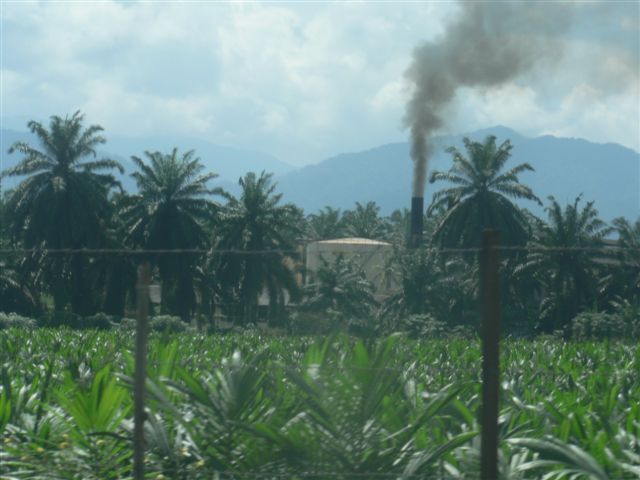
“There are planters who already comply,” Masidi added. “And that shows it can be done. It can be done. You can make money and at the same time be socially responsible. It can be done.”
Masidi said the same attitude of socially responsibility should be brought to the issue of orangutan conservation: “let’s be magnamimous to the orangutan, they may be the man of the forest, and we are man of the town, but we are all ‘orangs’.”
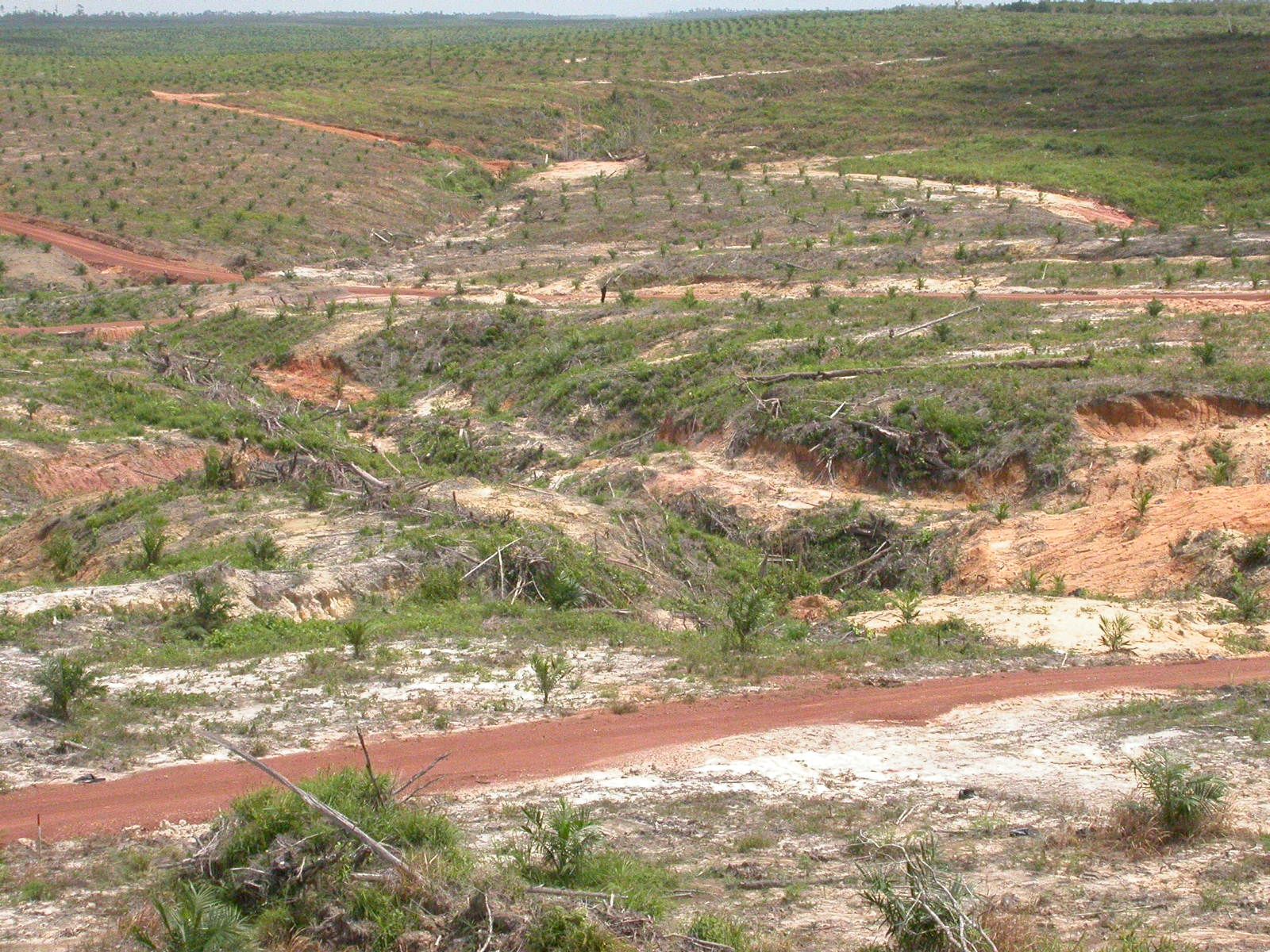
Sabah’s orangutan population has declined by approximately half in fifty years, from an estimated 22,000 to 11,000. In addition, sixty-five percent of Sabah’s orangutans live outside of protected areas. Masidi did not back away from saying that this widespread decline was due in part to the rise of palm oil plantations over land that once held forest.
“[The] orangutan is living in a fragmented forest and the reason they are fragmented is because of planters. It’s okay, you by all means plant, but you have to give them a good opportunity to survive. You see orangutans and other animals, they need to cross from one jungle to another,” Masidi said, adding that such fragmentation was affecting more than just the orangutans. The Bornean pygmy rhinos, he said, “are not multiplying because they have been cut off, we didn’t provide corridors for them to walk from place to place to find a mate.”
 In order to save orangutans—and other species—Masidi urged the palm oil industry and government to work willingly with local and international NGOs present at the meeting. Both sides are wary of each other. Many in the palm oil industry feel they have been unfairly singled out by environmental NGOs for deforestation and species loss. While the conservation community is frustrated by the palm oil industry consistently attempting to paint itself as ‘sustainable’, while not following through on environmental promises.
“To me, personally, I enjoy working with NGOs,” Masidi expounded. “I urge all departments, government bodies, not to treat NGOs as enemies but rather as friends who give you council from time to time. I think we need to tell ourselves that we are not exactly the experts on everything that we think we know. […] And I urge all of you not to be too defensive of what they [the NGOs] are going to say over the next few days, but in fact to take their words quite seriously, and ask ourselves are we moving in the right direction to conserve the orangutan?”
In the end Masidi urged the colloquium that it was time to put aside past differences and work together to create a society that would conserve rivers and wildlife.
“I say to you and I plead to you, look, […] why don’t we leave aside a legacy that the future generations can enjoy. The best legacy I can think of is to make sure we look after the pristine region of Sabah.”
The Minister of Tourism, Culture, and Environment concluded his speech: “The message is clear. Time is now. Get things done. Enough of talking,” and then he added, “after we talk for the next two days, of course.”
Following two days of intensive meetings between conservationists, the palm industry, and government officials, the colloquium adopted a resolution which included the acquisition of land for creating wildlife corridors of at least 100 meters along all major rivers and to connect fragmented forests. The resolution was handed off to Masidi on the last day. He promised to move quickly on it.
Photos: Jess McKelson