Lone Droscher-Nielsen: Orangutan Genocide
The destruction of the rainforests amounts to orangutan genocide
The Independent: Friday, 1 May 2009: Lone Droscher-Nielsen
My biggest wish is that people in the western world could understand what is happening here in Borneo, and how the demand for palm oil is devastating the rainforests and contributing to the extinction of the orangutan. Forests are being destroyed at the rate of an area roughly the size of two football fields every minute in the country, contributing massively to climate change and driving the orangutan closer to extinction with the loss of every acre. Orangutans are so much like us, yet we humans are killing them by the thousand. To me that is genocide and it has to stop.
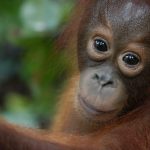
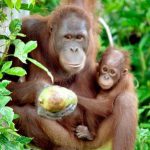
Orangutans are among our closest relatives. They demonstrate a high level of intelligence and an ability to solve problems, and there is an immensely strong bond between mother and child that lasts for the first eight years of a baby orangutan’s life. They are also key indicators to the health of the rainforests. Their place in the ecosystem is vital and yet still the demand for palm oil continues. Is nobody listening?
There is no need for this continual destruction of the rainforests for oil-palm plantations. There is already open grassland that can be used for this purpose, but we need pressure from the international community and to educate people about the dangers to our environment that is being caused by the world’s consumption of palm oil.
Rainforests aren’t just beautiful, they are there for a purpose. They help control the climate by absorbing carbon dioxide, prevent drought because they’re an important part of the water cycle, and help put a check on soil erosion. But they are also home to 420 species of birds, 210 species of mammals, 254 species of reptiles, and 368 species of freshwater fish.
At Borneo Orangutan Survival (BOS) we are doing our utmost to prevent the extinction of the orangutan. A century ago there were 300,000 wild Bornean orangutans. Today there are approximately 30,000 to 40,000 and extinction in the wild is predicted within 5 to 10 years if nothing is done.
Here at Nyaru Menteng, we’re dealing with the fall-out from the destruction of the rainforests. We have over 600 orangutans in our care, most of them orphans whose mothers were slaughtered while searching for food by workers in the oil palm plantations.
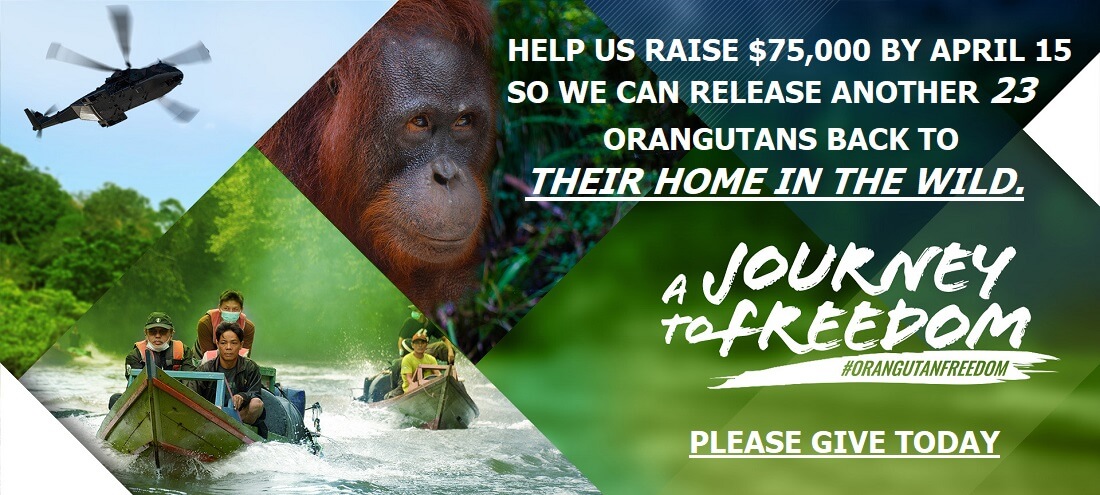
Babies and young orangutans who are brought to the centre are cared for 24 hours a day by our team of “babysitters”. At the age of about eight years, they are relocated in groups of around 25 to a neighbouring island for the first stage in their release. Here, they live a semi-wild existence but they’re fed daily and monitored, to check for illness, injury or an inability to adapt to their new lifestyle. A couple of years later, those who are ready for total freedom will be taken to an area of protected rainforest – deep in the heart of Borneo – and released back into the wild to contribute to the propagation of their species. No rehabbed orangutans have yet been released, but we’re hoping the first of these releases will take place this year.
We also take in a number of wild-caught adult orangutans, most of whom are found starving, injured or ill, and who are released back into the wild once we’re sure that they’re fit enough to survive on their own. To date, around 150 such orangutans have been released, and a further 219 have passed through the centre.
The palm oil issue is complex. Many communities in Borneo depend on these plantations for their existence, so we can’t just condemn the industry outright. This is why we at BOS are working with the Indonesian government and local communities to find a solution to a problem that will ultimately affect every human being on earth.
Progress is being made, but consumers can also play their part by putting pressure on those companies that use palm oil in their products, and to persuade them to source oil which has been produced by environmentally friendly methods.
The most important thing though, is that we don’t give up the fight to protect the rainforests, the orangutans, and, ultimately, ourselves.
Lone Droscher-Nielsen is the founder and manager of the Nyaru Menteng rescue and rehabilitation centre of Borneo Orangutan Survival Foundation which operates the largest primate rescue project in the world, with nearly 1000 orangutans in their care. They rescue both wild and captive orangutans which have been displaced by poaching and the devastation of their rainforest habitat for logging and the production of palm oil. The ultimate goal is the release of healthy and rehabilitated orangutans back into protected forest. Borneo Orangutan Survival is a registered charity committed to the protection of the orangutan and its rainforest habitat, and we rely entirely on donations to fund our work.