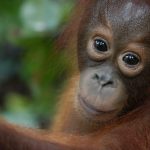

Pet trade puts orangutans at risk
Pet trade puts orangutans at risk
BBC News website: Richard Black: Environment correspondent: 16 April 2009
The trade in Sumatran orangutans for pets shows little sign of decline and is taking the species to the brink of extinction, a report concludes.
Compiled by Traffic, the international wildlife trade monitoring network, it suggests that more orangutans are being traded than in previous decades.
The species is listed as critically endangered, with only about 7,000 left.
Traffic says Indonesian authorities need to pursue prosecutions and heavy penalties against illegal traders.
The Sumatran orangutan is protected under national laws and international conventions.
But Traffic says the authorities rarely prosecute; and when they do, penalties are mild.
“There is no deterrent for those committing these crimes if they go unpunished,” said Chris Shepherd, acting director of Traffic in Southeast Asia.
“Indonesia has adequate laws; but without serious penalties, this illegal trade will continue and these species will continue to spiral towards extinction.”
Pet rescue
The organisation surveyed orangutans, gibbons and other primates in zoos, markets and rehabilitation centres around Sumatra.
Market traders told investigators that they could procure orangutans, as well as other threatened species such as Sun bears and tigers.
But the most compelling evidence came from rehabilitation centres, which exist to help orangutans and gibbons that have been kept as pets since infancy adapt back to life in the wild.
In the period 2002-2008, centres were “rescuing” about 20 orangutans unwanted by their owners each year.
In the previous decades, it had been on average about half of that number.
Although other factors could explain the difference – a new centre opening, and perhaps new staff keener to take the former pets into their care – it could be that the number of animals being traded has risen, even as wild populations have shrunk.
About half of the animals entered the rehabilitation process when they were under four years of age, well before reaching maturity, indicating that they had been procured as babies – a process that almost always involves killing the mother.
The Sumatran orangutan (Pongo abelii) is more threatened than the other species, which hails from Borneo.
In the 1990s, forest supporting about 1,000 of the apes was cleared each year. The overall population has shrunk by 80% in 75 years, largely because of deforestation, abetted by the pet trade.
Subsequently, civil hostilities in Aceh province at the northern end of Sumatra curbed the timber trade; but the 2005 peace accord and the new interest in palm oil are putting fresh pressure on the forests, and so on the orangutans.
Last year, the national government and the island’s 10 provincial authorities pledged to halt the loss of forests and native species, and to make development sustainable.
Traffic is a joint initiative of the International Union for the Conservation of Nature (IUCN), which numbers many governments among its members, and the conservation charity WWF.
Richard.Black-INTERNET@bbc.co.uk