
Wild at Heart
Wild at Heart
Mandala Magazine: Harumi Supit: April 1, 2009
Humans cause their estrangement from the wild, so can we help them return? Harumi Supit looks at the journey of our orangutan.
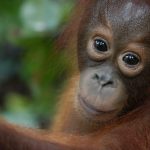
Separated from land by rivers, the large red orangutans of Samboja Lestari forest park, East Kalimantan, .jpg) are completely off-limits to humans. These majestic animals living on six man-made islands, 38 kilometers from Balikpapan, are undergoing rehabilitation in an attempt to send them back into the wild. The idyllic scenes of these vivid red primates nesting in trees and learning to forage for fruit, can almost help you forget their sad stories.
are completely off-limits to humans. These majestic animals living on six man-made islands, 38 kilometers from Balikpapan, are undergoing rehabilitation in an attempt to send them back into the wild. The idyllic scenes of these vivid red primates nesting in trees and learning to forage for fruit, can almost help you forget their sad stories.
With their expressive faces, social bonds and acute intelligence, orangutans bear an eerie similarity to man. We share 97 percent of their DNA, both build homes to live in, and both have been known to use tools.
But our orangutans are diminishing steadily under human impact. At present, around 40,000 Bornean orangutans are estimated to exist in the forests of Kalimantan, with about 6,000 Sumatran orangutans in Sumatra. Experts predict these orangutan species, found nowhere else in the world outside of Borneo and Sumatra, could become extinct in as little as 25 years.
According to Desmarita Murni, the biggest threat to orangutans is getting too close to humans. “It is loss of habitat and poaching, also hunting,” says the communications coordinator for World Wildlife Fund in Jakarta. Murni says the most effective solutions involve slowing the rate of deforestation, and cracking down on trading and hunting, which while illegal are not strictly enforced.
While a bleak picture, humans can also play a part in improving this situation. As with many conservation efforts, harnessing the power of tourism can be effective. “I think that truly sustainable ecotourism certainly has a part to play in conservation efforts,” says Helen Buckland, UK director of the Sumatran Orangutan Society.
Yet the problem is, viewing orangutans may not always help save them.
“Many visitors to Indonesia may not realize the difference between wildlife tourism, or simply visiting and viewing orangutans, and sustainable ecotourism.”
Sustainable practices require a balancing act – visitors need to follow strict rules which ensure their enjoyment is balanced against the benefits to the local community, while minimizing any negative impacts on the wildlife, she says.
In an ideal situation, rehabilitated orangutans should not have further contact with humans. Within this context, one of Indonesia’s most successful programs to date is the Samboja Lestari Forest Rehabilitation Program.
Founded in 2001 under the nonprofit organization, Borneo Orangutan Survival Foundation, the project’s primary aim is to reintroduce orangutans to the forest. A series of stages are followed, whereby the primates are gradually introduced to their natural habitats until they are finally placed in suitable habitats away from man.
“When you talk about contributing to real conservation of orangutans through tourism, I think Samboja Lestari is the best place,” says Lucas Zwaal, owner of De’Gigant Tours, a tour operator with 20 years of experience in Kalimantan. “They have volunteer packages, and the funds they raise from their Eco Lodge and visits are used for conservation of the orangutans and sunbears.”
.jpg) But Zwaal says visitors need to be patient with the restrictions placed on contacts with these orangutans, whose ultimate destiny should be to be wild again – not friendly pets of a forest park. “Samboja Lestari is the last step in the rehabilitation process to become wild again. During the whole rehabilitation process, orangutans learn that humans are their enemies,” says Zwaal. “This is quite different some other projects, where orangutans become a part of the tourism national park forever, and humans can even feed and hug them.”
But Zwaal says visitors need to be patient with the restrictions placed on contacts with these orangutans, whose ultimate destiny should be to be wild again – not friendly pets of a forest park. “Samboja Lestari is the last step in the rehabilitation process to become wild again. During the whole rehabilitation process, orangutans learn that humans are their enemies,” says Zwaal. “This is quite different some other projects, where orangutans become a part of the tourism national park forever, and humans can even feed and hug them.”
Samboja Lodge was initially constructed to house volunteers, then word of mouth brought paying guests. Besides observing orangutans from a distance, guests can help staff prepare orangutan foods and repair their habitats. According to Dr Grainne McEntee, BOS head of operations, US$6.5 million is needed annually to fund BOS programs, including the Samboja Lestari park. Awareness and donations are crucial to the programs.
While it is impossible to say whether these efforts can assure the orangutan’s survival, they offer a ray of promise. Lucas Zwaal for one says, with a note of hope in his voice, “I think they will survive.”