Zoo goes ape to preserve precious forests
Zoo goes ape to preserve precious forests
The Age: Jennifer Sheridan: August 9, 2009
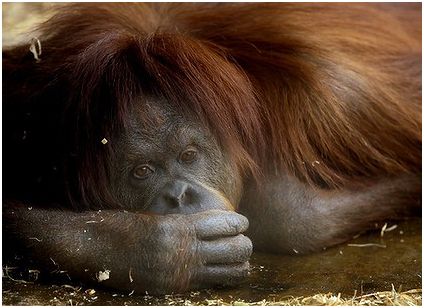
One of Melbourne Zoo’s resident orang-utans. The zoo is launching a campaign to help protect the rainforest habitat of wild orang-utans from palm oil farmers. Photo: Simon O’Dwyer
AS SUMA, one of Melbourne Zoo’s oldest orang-utans, fixes her trusting eyes on a playful toddler from the sanctuary of her enclosure, thousands of kilometres away her relatives in Sumatra and Borneo watch with fear the activities of the humans who come their way.
While Suma and her daughter, Kamil, live in safety, wild orang-utans are under increasing threat of extinction as their native rainforest habitat is razed for palm oil plantations to supply the world’s food and soap product manufacturers.
An estimated 40 per cent of Australian groceries contain palm oil but manufacturers are not required to list it as an ingredient, so most consumers are unwittingly buying products containing the oil – including detergent, shampoo, toothpaste, lipstick, chocolate, biscuits, snack bars, noodles and desserts – thereby fuelling demand for it.
By law, manufacturers must declare the use of peanut, soy bean and sesame oils under food allergy regulations, but they disguise the use of palm oil by listing it as vegetable oil.
Now, Melbourne Zoo hopes to end this practice with its ”Don’t Palm us Off” campaign, to be launched next Sunday. Zoo visitors will be given postcards to send to Food Standards Australia New Zealand calling for clearer labelling of products containing unsustainably farmed palm oil.
The campaign follows the failed attempt last year of Mornington Peninsula mother Amanda Enright to get FSANZ to make palm oil use a labelling requirement. Ms Enright was told the matter was outside the authority’s legal scope.
But Melbourne Zoo chief executive Jenny Gray has not been put off, saying the zoo has a responsibility to wild animals as well as its inhabitants and that the orang-utans’ plight cannot be ignored. She says a review has identified ”how we can continue to play a bigger and bigger role in working in conservation”.
Rachel Lowry, the zoo’s general manager of community conservation, said every Australian consumed an estimated 10 kilograms of palm oil every year, of which only 1 per cent was produced sustainably. So if consumers knew a product contained palm oil, they could make an informed decision about whether to buy it.
”Everyone is driving this process, which means that everyone has the power to alleviate this process,” Ms Lowry said.
The zoo’s first conservation initiative, the ”We’re Calling on You” campaign earlier this year, resulted in more than 9000 mobile phones being recycled. The phones contain some components made using minerals found in gorilla habitats in the Democratic Republic of Congo, but the minerals can be reclaimed from old phones.
In December a campaign to encourage better fishing line disposal will coincide with the opening of the new seal and ocean animal exhibit Wild Sea.