In Kalimantan, hard at work reversing the damage to peat forests
Jakarta Globe: 21 September 2011: Fidelis E. Satriastanti
Sebangau, Central Kalimantan. Deep in the heart of the Sebangau forest lies a 50,000-hectare swath of peat swamp, the kind that fueled the thick, choking clouds of smoke that blanketed much of Southeast Asia in 1997.
That was the worst year for haze in the region, and though annual fires still rage on during the dry season, it was never meant to be like that.
Two years earlier, the Sebangau peat swamp had been designated a research area, the Natural Laboratory for the Study of Peat Swamp Forest, under the management of the Center for International Cooperation in Tropical Peatland (CIMTROP).
A year later, then-President Suharto initiated the ill-advised Mega Rice Project, a scheme to clear-cut a million hectares of centuries-old peat forest in Kalimantan, including Sebangau, drain the soil and plant rice — even though CIMTROP and others warned that peat was a poor medium in which to grow rice.
Within two years the project was halted, but by then the environmental damage wrought was sizeable. Clear-cutting saw forest cover in the area drop from around 65 percent in 1991 to 45 percent in 2000.
Illegal loggers moved in, felling virtually all the area’s commercially viable trees. And 96 drainage canals, stretching more than 4,000 kilometers, bled the peat layer dry, making it more prone than ever to wildfires.
“It was just havoc,” Kitso Husin, a researcher with CIMTROP, said of the period until 2000. “There were so many people running around here and cutting down large trees in the forests. Logs were stacked end to end for almost a kilometer to be towed to Surabaya by sea.”
Conserve and Restore
The environmental carnage has since died down, Kitso says, and the CIMTROP scientists have been able to return to their original purpose of researching ways to conserve peat forests and restore damaged areas. Part of the research includes the building of a tree nursery to grow the saplings best suited for regreening the damaged areas.
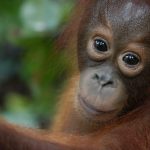
CIMTROP also works with scientists from the Orangutan Tropical Peatland Project (OuTrop), who study the orangutans and other animal species endemic to the forest.
Sebangau National Park is home to around 7,000 orangutans and 20,000 gibbons, as well as 315 tree species.
Susan Cheyne, a researcher from Scotland who has spent seven years at the laboratory, says the study of biodiversity goes hand in hand with that of conservation.
“We’re mostly learning about biodiversity, however we also study about peatlands because you can’t have biodiversity without a habitat,” she said.
Ecological Ways
There have been some hiccups, though. Cheyne says the researchers’ attempt to replant some of the heavily logged areas has been foiled by an inordinately extended rainy season.
“We lost 600 seedlings because there was no dry season for the past 18 months,” she said.
“Now we’re trying to develop other seedlings that we hope to plant on the riverbanks to restore the damaged peat forest. We are collecting at least seven native plant species to be planted here.”
Another project the scientists are hard at work on is blocking the canals built for the rice project, which continue to drain the swamp of much-needed moisture and serve to feed the rivers that illegal loggers use as conduits to move timber out of the forest.
“We have tried all sorts of methods to try to block the canals because if the peat swamp gets too dry, it burns very easily,” Cheyne said.
In addition to preventing forest fires, keeping the peat intact and replanting degraded areas will keep large amounts of climate change-inducing carbon dioxide locked in the deep peat layer.
Although the government is pushing for more carbon capture projects as part of efforts on reducing emissions from deforestation and forest degradation (REDD), Kitso says the Sebangau lab is not part of the scheme.
REDD is a UN-backed initiative for forest conservation in which the main idea is to give people incentives to keep forests intact. The problem, says Kitso, is a lack of clarity about the scheme.
“There’s a lot of confusion about REDD because it’s not clear how much you can get from carbon capture or what kind of method pays,” he said.
“For instance, is there a different incentive structure for keeping the forest intact, for reforestation and for re-wetting the peat swamp? And how do you measure the amount of carbon sequestered? All I know for sure is that if you cut down forests then you don’t get any money, that’s it.”
“If we’re confused about how to interpret REDD, how do we explain it to the local people?” adds Kitso, who is studying at Central Kalimantan’s Palangka Raya University for a master’s in carbon management, the first such degree offered in the country.