Orangutan Habitat
The Tropical Rainforest – Home to the Orangutans
Of the nearly 250,000 flowering plants known, 170,000 or 68 percent occur in the tropics and subtropics, making tropical rainforests among the most diverse and complex living environments on Earth. Those of the Far East, including Borneo and Sumatra, may be some of the most complex of all.
 For a hint of the diversity, Borneo and Sumatra represent 1.3% of Indonesia’s landmass but they support 10% of its known plant species, 12.5% of its mammals, and 17% of its other vertebrates.
Borneo alone has 10,000-15,000 species of flowering plants, 3000 species of trees, 2000 orchids, and 1000 ferns. One tiny 1.12 hectare Bornean rainforest plot included 264 tree species and that did not include its palms, lianas, orchids, ferns and other vegetation.
Each of these organisms is dependent on the whole ecosystem functioning – like a house of cards is dependent on all of its cards. If whole areas of forest are clear-cut, the whole system fails; habitats for thousands of species disappear, and are lost forever. 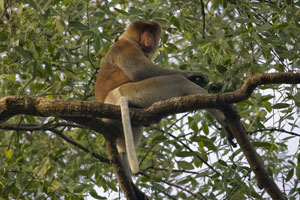 Once the forest is gone, the tropical, acidic, and nutrient poor soils make it difficult for crops to prosper for more than a few years, eventually being replaced by weeds or coarse grasses such as alang-alang in Indonesia. Such plants as alang-alang have no economic uses, are very hardy, are not edible and may be alleliotrophic, meaning that other plants are repelled from growing nearby. These areas become much like a desert.
Alternatively the land is turned into a palm oil plantations. These are monocultures with a recent study suggesting over 80% of biodiversity is lost when rainforest is replaced by the oil palm.
Burning off, while illegal, is often part of the process in conversion to oil palm and this has become a major environmental issue. It is estimated that about 4% of global greenhouse emissions can be attributed to the burning and degradation of Indonesian peatlands, making the country the world’s third largest emitter.
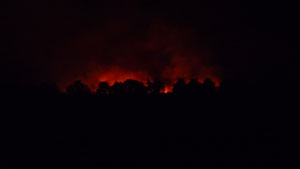
It is estimated that up to 28 million hectares of rainforest has been lost since 1991 through a combination of palm oil expansion and the logging industry. The United Nations Environment Programme has indicated that, if current trends of forest conversion continue unabated, up to 98% of the forest cover could be lost by 2022.
Photos: Karen Stenner, Fleur Butcher