INUNG – A SYMBOL OF CONSERVATION SUCCESS
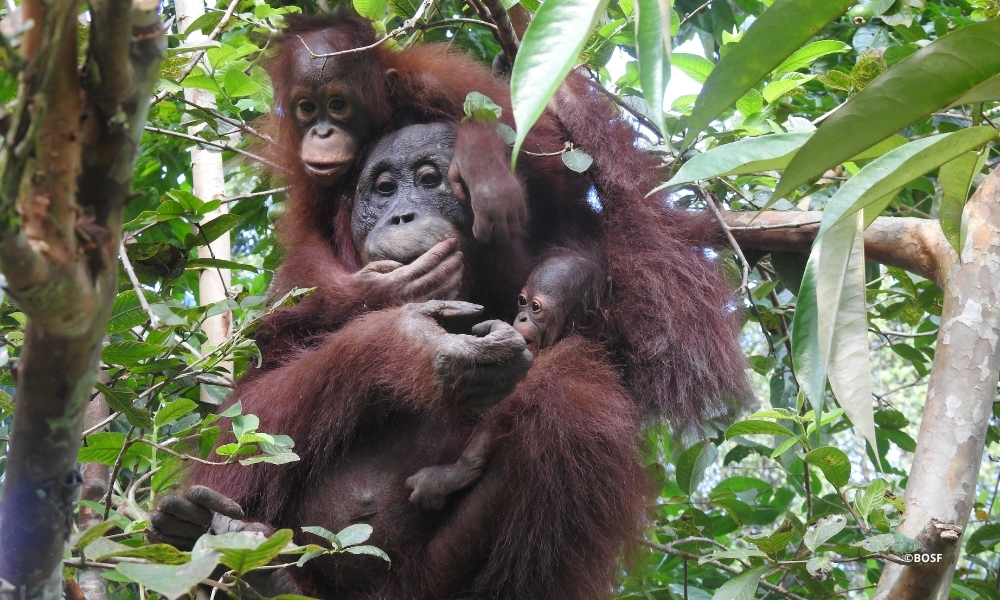
The story of Inung, a rehabilitated orangutan thriving in the Bukit Batikap Protected Forest, provides an inspiring example of how orangutan rehabilitation enhances conservation success.
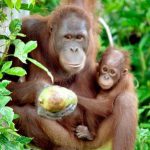
Inung was released into the wild in 2013, at the age of 15, alongside her two young daughters, Indah and Ina. Since then, Inung has adapted remarkably well to life in the forest. Over the years, she has successfully raised four infants, a vivid testament to her resilience and the effectiveness of our rehabilitation program.
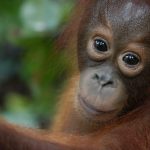
By 2025, Inung’s impressive story reached a new milestone. She is now often seen accompanied by her two youngest children, Indie and Indro, who eagerly follow her as she explores the forest. Their daily lives continue to overlap with the working area of the Totat Jalu Camp, where researchers and monitoring teams carry out their conservation efforts.
Importance of structured rehabilitation
Scientific studies have highlighted that an orangutan’s life history and learning experiences strongly influence their ability to adapt post-release. Inung’s successful reintroduction demonstrates how structured rehabilitation can effectively prepare orangutans for survival in the wild.
In 2025, the Post-Release Monitoring Team observed Inung several times near the camp. For instance, they saw her reusing and repairing an old nest instead of building a new one. This behaviour demonstrates the resourcefulness of orangutans in conserving energy and materials, which aligns with findings that orangutans often exhibit innovative survival strategies.
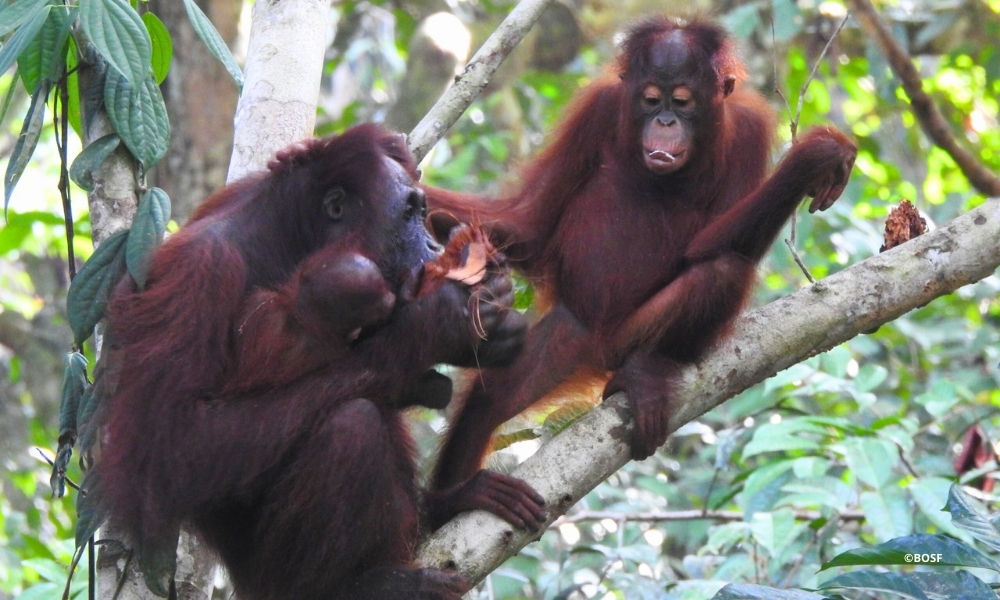
The fact that Inung has raised four offspring in the wild proves that reintroduced orangutans can establish sustainable generations.
Early signs of independance
Meanwhile, Indie, Inung’s adolescent daughter, showed early signs of independence by crafting her own nest and even playing creatively with nearby branches, illustrating how Inung successfully teaches her offspring essential survival skills.
According to research on orangutan rehabilitation, the development of foraging and nest-building skills in young orangutans is a critical step toward successful independence in the wild.
Longterm Suvival is the true success
However, Inung’s story is not just about her survival. It represents the broader success of orangutan reintroduction programs. Conservationists stress that long-term survival in the wild is the true measure of success, rather than simply the act of release.
The fact that Inung has raised four offspring in the wild proves that reintroduced orangutans can establish sustainable generations. Indie’s growing independence and Indro’s ongoing learning under his mother’s care further emphasise the long-term impact of successful rehabilitation.
From Inung, we learn that when given a safe space, rehabilitated orangutans can not only survive but also continue their lineage in their wild home.
Find out more about our orangutan conservation efforts here.