SHAPING A BRIGHTER AND SUSTAINABLE FUTURE FOR ALL
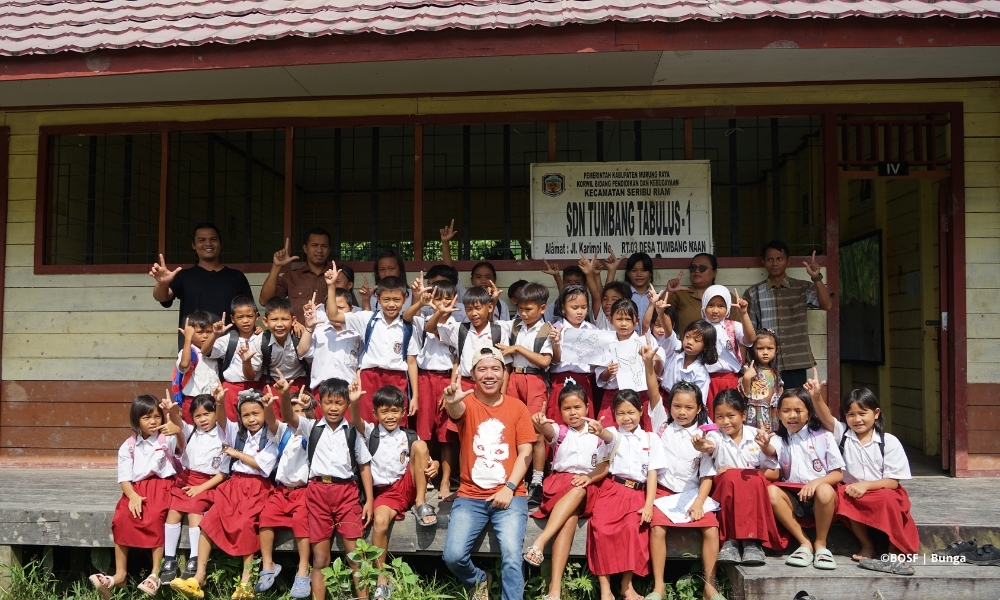
At BOS, we remain committed to orangutan conservation by engaging local communities. Recently, the BOS Foundation’s Community Development and Communications Teams undertook a long journey to visit several remote villages near the Bukit Batikap Protection Forest in Central Kalimantan, Indonesian Borneo.
The purpose of this trip was to convey crucial messages about forest and orangutan conservation to the young generations—the future stakeholders of our planet—while also introducing communities to more sustainable livelihood options that do not harm the forest.
Tailoring different approaches
One of the main challenges of environmental education is to simplify complex conservation messages so children can easily understand them. To address this, the BOS team engaged students with fun activities, such as singing and playing games, before introducing them to their forest “neighbours”, the orangutans.
The teams tailored different approaches to each education level. For younger students, the focus was on understanding orangutans and their role in the forest. For junior high students, the lessons emphasised how to live sustainably and coexist with forests.
By involving students, teachers, and local communities, we aim to nurture awareness that conservation is not only about protecting wildlife but also about securing a sustainable future for us all.
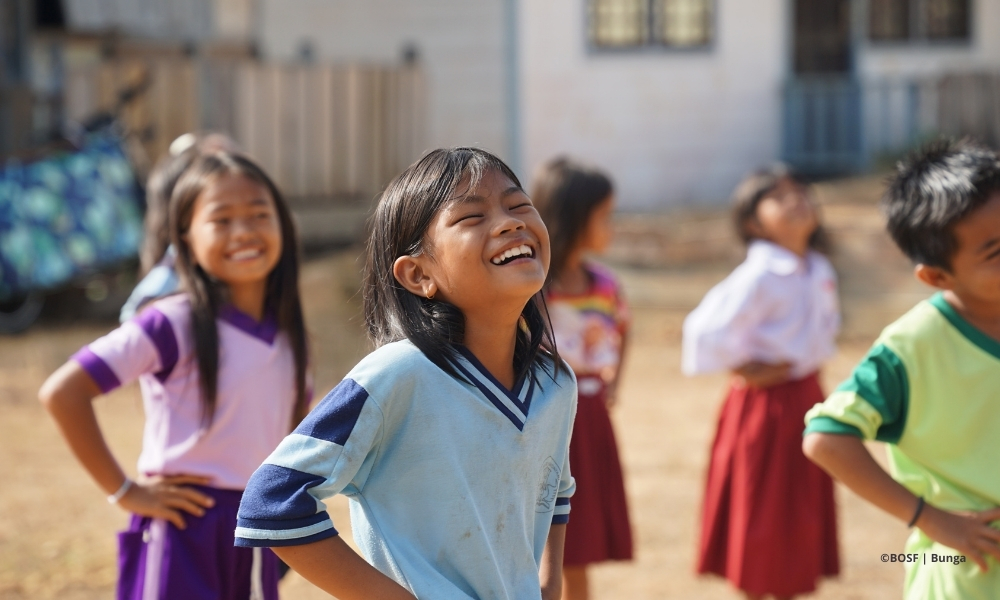
The BOS team engages students with fun activities, before introducing them to their forest “neighbours”, the orangutans.
Improving quality of life
However, the key to lasting change goes beyond education. Protecting orangutans and their habitats must go hand in hand with improving the quality of life for the local communities living alongside the forest. This is why BOS has initiated a program that not only focuses on forest conservation but also on empowering households–especially women–to build better and more sustainable livelihoods.
Many families living in villages around the Bukit Batikap Protection Forest own unused plots of land near their homes. Instead of leaving these areas idle, they can be transformed into small gardens that provide vegetables and herbs for daily household use.
Healthy food and additional income
The concept is simple yet deeply meaningful. It begins by identifying each household’s food needs, followed by distributing seedlings and providing training in planting and gardening. In the long term, these household gardens are expected to grow into larger-scale ventures that align with the local commodities of each village. The result is twofold: it not only guarantees healthy food for families but also creates opportunities for additional income.
Although the program may sound straightforward, its implementation comes with challenges. The remote locations of these villages limit access to decent job opportunities and livelihoods. As a result, communities often turn to extractive activities such as illegal logging, mining, or unsustainable industrial farming, which ultimately destroy vital orangutan habitat.
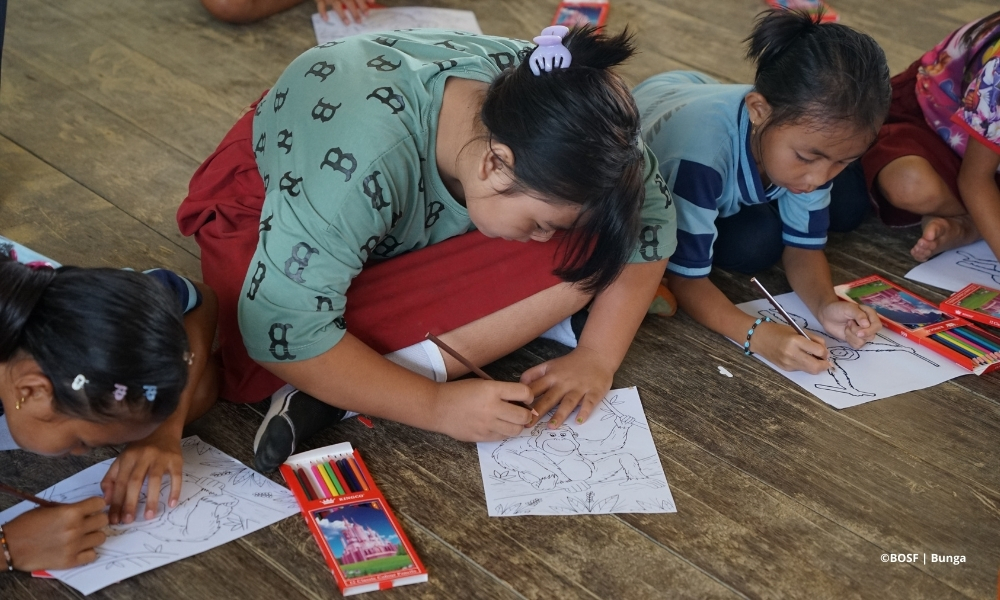
Understanding orangutans and their role in the forest, as well as how to live sustainably and coexist with forests, are essential topics.
Bridging gaps
The economic benefits from such activities have shaped how people perceive the forest and its natural resources. Changing this mindset is not easy. That is why this program offers practical, household-based solutions that bridge the gap between daily economic needs and reducing pressure on the forest.
At every stage, we uphold the principles of Free, Prior, and Informed Consent (FPIC). Rather than imposing solutions from the outside, the BOS Foundation works hand in hand with communities to design activities that reflect their own needs and values. Our goal is to promote independence, decrease reliance on forest exploitation, and ensure the long-term preservation of ecosystems for future generations.
In summary, by strengthening household economies, families can build brighter futures without compromising the conservation of orangutans and their forest habitats—a win-win for all.