About Borneo Orangutan Survival (BOS) Australia
By supporting us, you are helping to:
- rescue, rehabilitate and reintroduce orangutans
- provide public awareness and educational programs
- protect existing rainforest habitat
- support and educate the people who depend on forests to earn their living.
We directly support the work of our partner organisation, Borneo Orangutan Survival Foundation (BOSF), and their projects, including the:
- Nyaru Menteng Orangutan Reintroduction Centre
- Samboja Lestari Orangutan Reintroduction Centre and Land Rehabilitation
- Mawas Conservation Program.
The Borneo Orangutan Survival Foundation (BOSF) in Indonesia is a non-profit foundation supported by BOS Australia and other sister organisations around the world.
BOSF operates under an official agreement with the Indonesian Ministry of Forestry for the conservation of Bornean orangutans and their ecosystem that works by involving and educating the local people. The BOS teams focus on orangutan rescue, reintroduction and habitat conservation both in East and Central Kalimantan. Currently, BOSF, supported by BOSA and other sister organisations, manages the biggest orangutan reintroduction program in the world, and is caring for over 400 orangutans. The Foundation also manages a peat land conservation area which provides habitat for 3,000 wild orangutans in Central Kalimantan and manages an Ecosystem Restoration Concession in East Kalimantan that is dedicated as orangutan habitat.
On the ground in Indonesia, BOSF works with the support of over 470 highly devoted local staff as well as experts in conservation, primates and community empowerment.
Interests include:
- biodiversity (flora and fauna)
- forest rehabilitation
- forest inventory and monitoring
- agroforestry to improve local peoples’ welfare and education
- working with orangutans and other protected wildlife.
BOSF was formed in 1991 and is under the capable direction of its board with Prof. Dr Bungaran Saragih as chairman and Dr Jamartin Sihite as CEO. BOSF has a Board of Trustees overseeing operations, assisted by a Scientific Advisory Board (SAB) made up of orangutan experts and other specialists from Indonesia and around the world.
Since its incorporation, BOSF has achieved many enviable successes which have been directly contributed to by the support of BOS Australia’s generous donors.
Our committee
BOS Australia’s committee consists entirely of volunteers who are elected annually. Following the AGM held on 30th November 2022, the current committee is as follows.
President – Kerin Welford (NSW)
An internationally accredited Certified Fundraising Executive (CFRE) and Fellow of the Fundraising Institute of Australia (FFIA), Kerin Welford is the Director of Bluestone Fundraising. With more than 24 years’ experience, Kerin has worked within nine international, national and regional charitable organisations, spanning the not-for-profit sector across Australia and New Zealand. A multi-award-winning fundraising leader, change manager, international conference speaker and mentor, Kerin also serves as a Director of The Society for the Protection of Animals Abroad (SPANA) and is the President of Sydney Street Cats.
Treasurer – Corey Mrnjavac (Vic)
Corey is a qualified Certified Practising Accountant (CPA) with over 20 years’ experience in a range of roles across both commercial and non-for-profit sectors in Australia and overseas, and is currently Director of Corporate Services for an established Victorian-based mental health organisation. Corey is committed to and passionate about the survival of orangutans and assists through his broad experience in financial, compliance and operational matters.
Secretary – Tom McCrie (NT)
Tom is a practising solicitor with 10 years’ experience working in both public and private sectors. Tom has significant experience providing advice on corporate and governance matters, funding arrangements and in general commercial, property and environmental law. Tom brings legal and administrative skills to the Secretary role. Tom has a passion for wildlife photography and hopes that his skills can assist with the conservation of the Bornean orangutan and its habitat.
Vice President – Louise (Lou) Grossfeldt (NSW)
Louise is the Primate Curator at the new Sydney Zoo. This follows a long term supervisory role at the Primate Unit at Sydney’s Taronga Zoo, where she’s worked for over 25 years specialising in the husbandry and management of a range of different primate species. Louise has been involved with BOSA since 2002. She provides animal husbandry advice on the care of the non-releasable orangutans held within the BOS sanctuaries in Indonesia. Louise is one of the key enrichment advisors of the welfare/ enrichment committee. She is working alongside Fleur Butcher, another key orangutan person, to develop effective enrichment programs.
Committee Member – Judith Curran (Dunedin, New Zealand)
Our constitution
Our ambassadors
Borneo Orangutan Survival Australia (BOSA) is proud to announce its ambassador partnerships. Our ambassadors include actress Linda Cropper (Offspring, Network Ten) and Teisha Lowry (Australian model and founder of Indah Organics) who will join forces in giving a voice to the endangered orangutan population of Borneo.
The late Tony Gilding, former President of BOS Australia, said “As we continue our hard work over in Borneo, we are thrilled to align with these generous, passionate animal lovers to raise awareness of the plight of the orangutans here in Australia, and look forward to taking even greater strides forward over the coming years in helping our primate friends.”
Linda Cropper
One of Australia’s most versatile and accomplished actors, Linda Cropper has a string of film credits to her name. Her role in Channel Ten’s Offspring has seen her achieve critical acclaim. Well renowned for her Australian theatre performances, Linda is also a huge lover of furry friends and is appalled at the destruction of the orangutan’s habitat. “I am humbled to make any contribution I can to help them,” she shares.
Teisha Lowry
The brains and natural beauty behind INDAH Organics, Teisha Lowry is a model and entrepreneur working to ensure the beauty industry is both sustainable and ethical. Teisha has many strings to her bow. She is an aromacologist, an organic skincare founder, a world-famous model and a business graduate, but perhaps most proudly she is a champion for green and humanitarian causes. “I was so excited to come on board as an ambassador for BOSA, and already have adopted two babies, Miko and Dodo,” says Teisha. “Orangutans are our closest ancestors, sharing 97 percent of our DNA, so I try and do as much as I can on a personal and business level to bring awareness to this wonderful cause.”
BOSA is proud to align with such passionate people, in their quest to help the plight of the orangutans.
Our partners
- BOS Foundation Indonesia | Contact: bos_communication@orangutan.or.id
- BOS Germany | Contact: info@bos-deutschland.de
- BOS Switzerland | Contact: info@bos-schweiz.ch
- BOS UK | Contact: hello@bos-uk.org
- Save The Orangutan, UK | Contact: info@savetheorangutan.org
- Save The Orangutan, Scandinavia | Contact: info@redorangutangen.dk or info@savetheorangutan.org
- BOS USA | Contact: hello@bos-usa.org
Member information
2023 AGM
The Borneo Orangutan Survival Australia AGM was held on Monday 23rd October at 7pm via Zoom. Thank you to those that attended.
2022 AGM
The 2022 BOS Australia AGM was held on the 30th November at 7pm via Zoom. Thank you to those that attended.
2021 AGM
The 2021 BOS Australia AGM was held on the 25th October at 7pm via Zoom. Thank you to those that attended.
2020 AGM
The 2020 BOS Australia AGM was held on the 2nd of November at 7pm via Zoom. Thank you to those that attended. For those unable to attend, please find a recording of the meeting here.
2019 AGM
The 2019 BOS Australia AGM was held at The RAN Sailing Club, Sir David Martin Reserve/1C New Beach Rd, Darling Point, NSW, 2027, at 6pm on 28 October 2019.
2018 AGM
The 2018 BOS Australia AGM was held at The RAN Sailing Club, Sir David Martin Reserve/1C New Beach Rd, Darling Point, NSW, 2027 at 6pm on 15 October 2018.
2017 AGM
The 2017 BOS Australia AGM was held at The RAN Sailing Club, Sir David Martin Reserve/1C New Beach Rd, Darling Point, NSW, 2027 at 6pm on 23 October 2017.
2016 AGM
The 2016 BOS Australia AGM was held at HLB Mann Judd, Avalon Room, Level 19, 207 Kent Street, Sydney, NSW, 2000 at 6pm on 7 November 2016.
How Can You Help
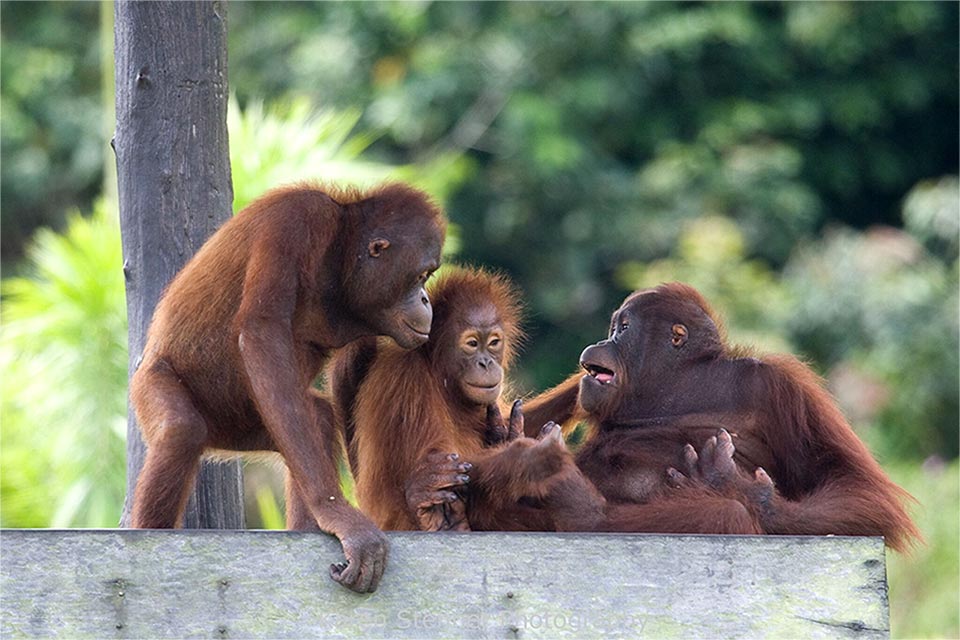
There are lots of ways you can support orangutans and help ensure the survival of this precious ape.
Adopt an Orangutan
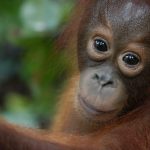
Orangutans are endangered and at risk of extinction. Habitat destruction results in hundreds of orphaned orangutans, who rely on our care every year. You can help by adopting one. Their dedicated ‘nannies’ teach them everything they need to know for when it’s time to release them back to the wild. You can follow their progress through Forest School.
Adopt Now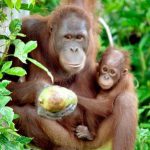
Make a Donation
Please help the Orangutans in their struggle for survival. Your donation is important and goes directly to BOS Indonesia. By donating, you are helping bring this noble yet endangered species back from the brink of extinction and on a path to freedom - from rescue to rehabilitation and release.
Donate Now
Visit Our Shop
The perfect gift for any occasion! Choose from our selection of instant gifts that directly support our orangutans. You can buy a wheelbarrow, provide food for an orangutan for two months or lots more. You will receive a certificate, personalised with the name of your choice - perfect gift for you or a friend.
Shop Now